.png)

Workforce check-in for temporary and emergency sites helps site managers keep a live record of who is present, deliver current safety information and support emergency response.
This is especially useful at restricted-access locations such as unstable buildings, landslides, severe-weather recovery areas and urgent remediation sites, where employees, contractors and emergency teams may arrive from several organisations throughout the day.
EVA Check-in helps teams set up workforce check-in quickly, deliver digital safety inductions and maintain an emergency communication channel as site conditions change.
Set up a temporary site in minutes
A site manager can create a new location in EVA Check-in, generate a unique QR code and print a sign-in poster. Everyone entering the controlled area can scan the code when they arrive and check out when they leave.
This creates a live record of who is on site without requiring permanent sign-in infrastructure.
For temporary and emergency sites, this can provide:
- A current register of employees, contractors and other authorised people
- Shared visibility across participating organisations
- Rapid deployment at new or changing locations
- Consistent check-in and check-out processes
- Attendance records for operational reporting
- Contact information during an emergency
Deliver site safety inductions digitally
EVA Check-in can include a digital site safety induction within the check-in process. Each person receives essential information about current hazards, access controls and emergency procedures before starting work.
Inductions can cover:
- Restricted areas and exclusion zones
- Required personal protective equipment
- Safe access and exit routes
- Assembly points and evacuation procedures
- Emergency contacts and site coordinators
- Hazard and incident reporting processes
Digital delivery provides a consistent induction process and records the completion of required steps. It is also easily updated at any time as the site evolves.
Share updates as site conditions change
Conditions at temporary and emergency sites can evolve throughout the day. Severe weather, ground movement, structural assessments or new work activities may change access requirements and safety controls.
EVA’s post-check-in notifications allow site managers to send updated information to people after they enter. Messages can advise them about:
- Newly identified hazards
- Changes to access routes or exclusion zones
- Updated protective equipment requirements
- Weather and ground-condition warnings
- Revised assembly areas
- Work restrictions or site closures
This extends safety communication beyond the initial induction and helps everyone respond to current conditions.
Account for people during an evacuation
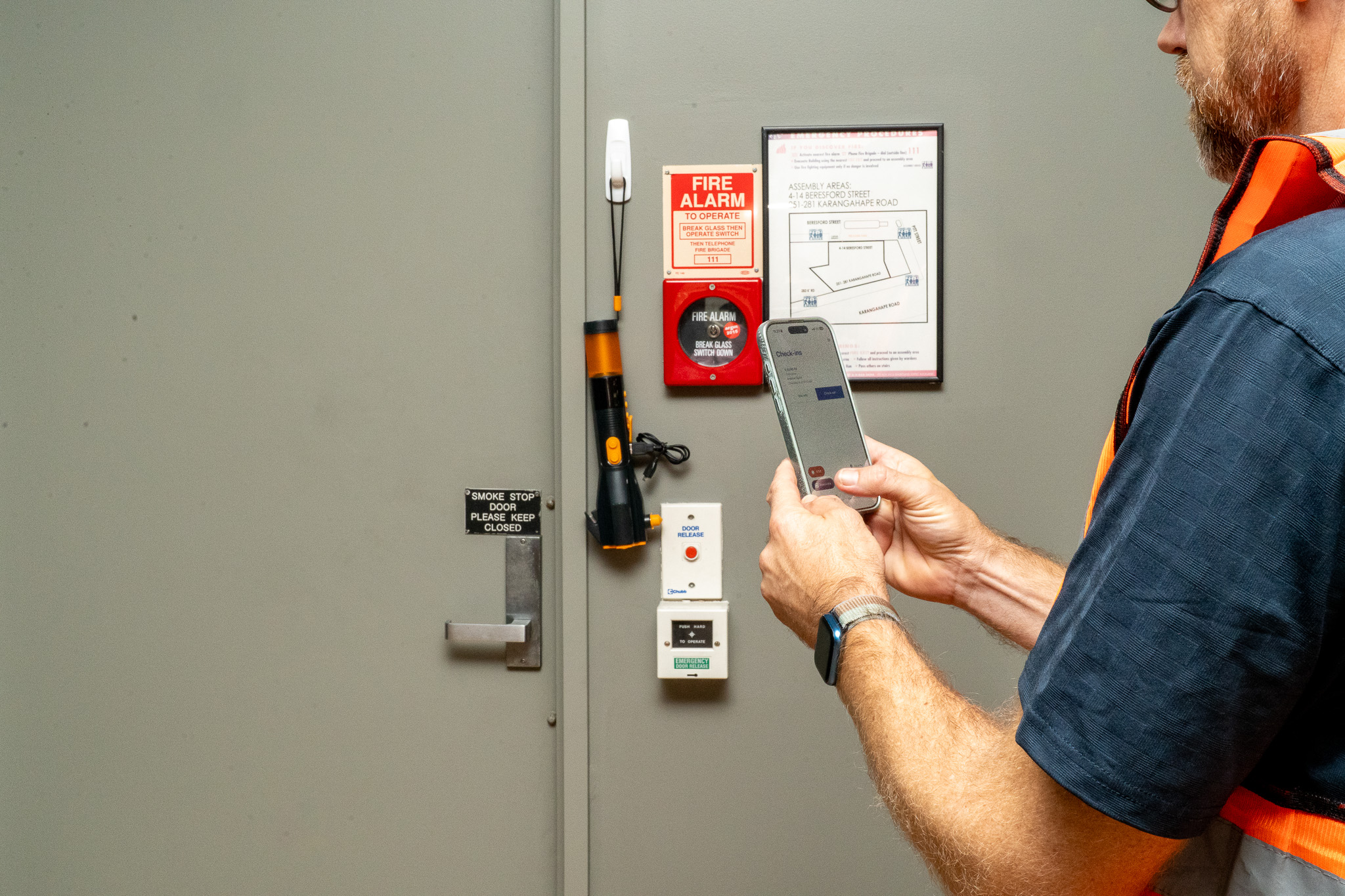
During an evacuation, authorised wardens can access EVA’s real-time site register from a mobile device, kiosk or portal.
Multiple wardens can work from the same evacuation list. As people are accounted for, their status updates across each device. This supports coordinated evacuations across large sites, separate work zones or locations managed by several organisations.
The shared register also provides continuity if the primary site manager is unavailable.
Allow workers to request assistance
EVA’s optional SOS function allows people to request assistance using the SOS button in the EVA mobile app.
When someone raises an SOS, key information—including their last available location—can be broadcast to people on site. This can help coordinators identify who needs assistance and organise an appropriate response.
The SOS function is particularly useful across dispersed locations where people may work away from the main entrance, assembly area or site office.
Add a backup emergency communication channel
Radios remain an important communication tool across temporary and emergency sites. EVA can complement radios with an additional digital channel, especially as satellite connectivity for phones becomes more common.
Site managers can send SMS and push notifications to everyone currently checked in. Messages can communicate:
- Evacuation instructions
- Emerging hazards
- Access or assembly-point changes
- Severe-weather warnings
- Directions following an SOS request
- Site closure information
Using several communication channels improves resilience. When a radio is unavailable, out of range or difficult to hear, EVA provides another way to reach the people recorded on site.
Establish visibility from the start
Temporary sites can appear quickly following natural events, structural failures or urgent remediation work. Their short lifespan makes rapidly deployable safety systems valuable.
With EVA Check-in, a new site and QR code poster can be prepared in minutes. Workforce check-in, digital inductions, safety updates, evacuation tools and SOS alerts give site managers greater visibility as people arrive and conditions change.
Here are some common questions about workforce check-in for temporary and emergency sites.
Frequently asked questions
How do you track who is on a temporary site?
A digital workforce check-in system gives site managers a live register of employees, contractors and visitors as they arrive and leave.
How can workers complete a safety induction before entering a site?
A digital induction can be included in the check-in process so workers receive current site rules, hazards and emergency procedures before starting work.
How do you account for workers during an evacuation?
A real-time site register helps wardens confirm who has been accounted for and identify who may still need assistance.
Can temporary sites send emergency updates to workers?
Yes. Site managers can use digital communications such as SMS or push notifications to send updated safety instructions, hazard alerts and site closure information.
Talk to the EVA Check-in team about workforce check-in, digital safety inductions and emergency communications for temporary and emergency sites.